

What DevOps is NOT
Common misconceptions around DevOps

Tech space is filled with jargon, and in my experience, this translates to different interpretations of the same term. DevOps is a perfect example of this phenomenon. I was speaking with a startup CTO at a conference who stated:
"DevOps was great when it was about automation, they ruined it with process."
The kicker was his company was building a DevOps tool.
As someone who's been in this space for many years, I was shocked to realize that there is not a common definition (or at least similar) of DevOps.
The lack of clarity this is actually massive for software delivery. In this article, I will dive into the various misconceptions and their impacts.
What DevOps is not...
Automation: Imagine a scenario where you're payments system has gone down due to a ransomware attack and the focus is to get back online. The success metric associated with this would be Mean Time To Recover (MTTR). Automation on its won't bring up the system up on it own. Developers would not be able to use their own environment deployment to resolve this either. It would need incident management which would be a collaborative effort with developers, product managers, cybersecurity, compliance and integrations teams involved.
Tools: Tools are the first things most teams think of when it comes to DevOps because they want to deploy faster. But focus on tools alone may lead to tool sprawl, improper configurations due to lack of training, and siloed implementations if not everyone is on board. Rather than deploying faster, it will result in actually more overhead and complexity.
NoOps: The term NoOps is misleading coming from "we only use serverless and PaaS products so we don't need operational support. Sure, your need for deploying and managing infrastructure may be minimized, there still is a need for system configurations in version controls, selecting of deployment patters, approvals for quality control, monitoring (beyond just scaling) and cybersecurity across both application and deployment pipelines.
Role elimination: Roles are frequently transformed. Operational roles such as system administration that focus on patching are now focused more on Infrastructure as Code, Policy as Code, and managing cloud footprint. The goal is to eliminate repetitive manual tasks that could be better managed by automation and remove silos that reduce flow. As shared responsibility is a core principle of DevOps, developer mindsets need to shift to "you build it, you run it". They end up learning new skills as part of this process. Additionally, the teams might need support so you could be looking at new roles such as Site Reliability Engineer (SRE) or DevSecOps Engineers.
DevOps actually does have elements of the 4 things outlined above....and more. At it's core, it is about combining Development + Operations. Processes improvement, fostering a collaboration culture and training are also huge parts of ensuring that software is delivered on time, on budget and with no issues.
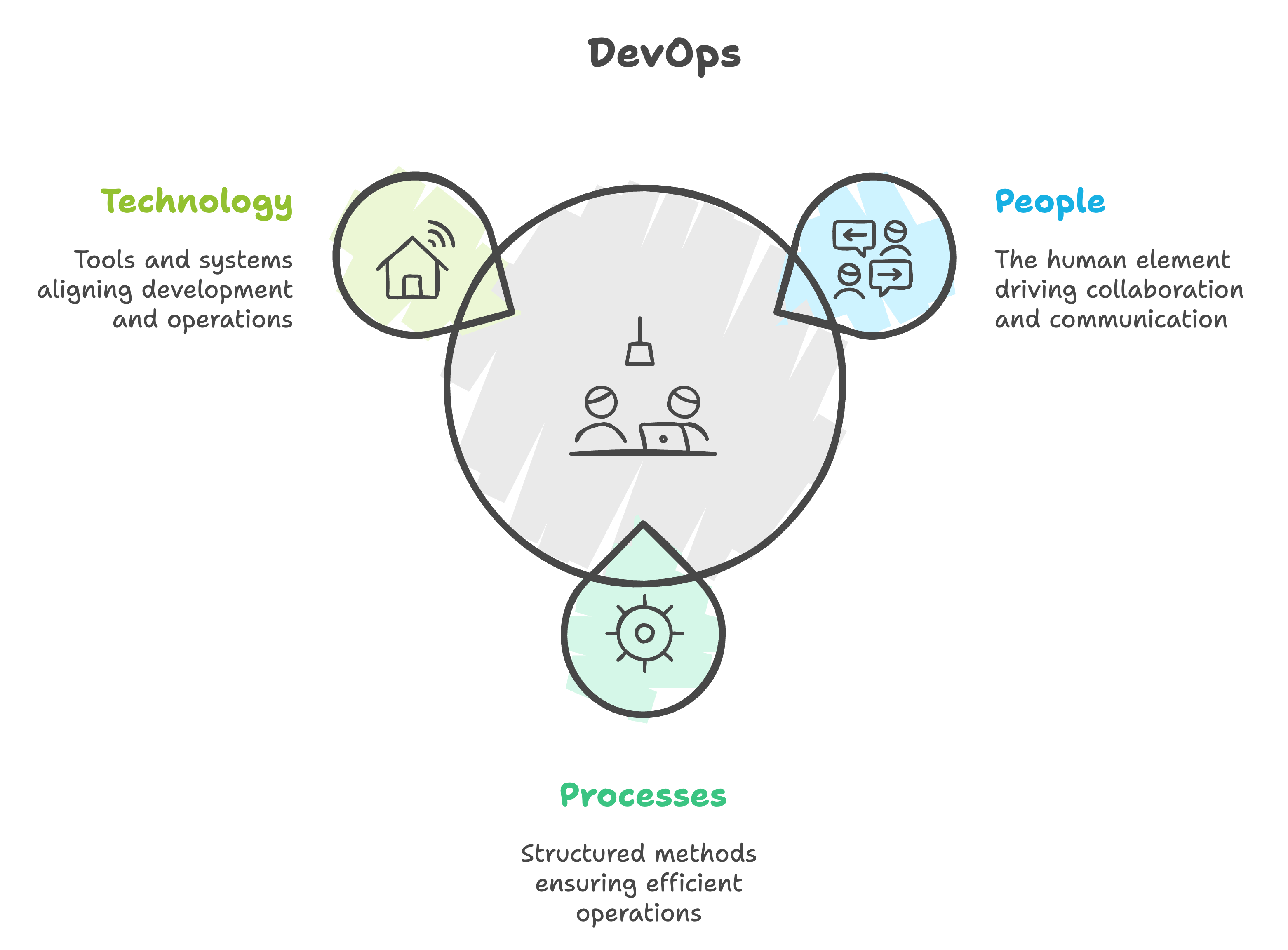
The beauty of DevOps lies in its ability to break down silos and bring teams together under a shared responsibility for delivering high-quality software efficiently. But it’s critical to move past the common misconceptions and recognize DevOps for what it truly is: a blend of culture, process, and technology. Automation and tools are enablers, but they are not the endgame. Collaboration, communication, and continuous improvement are the real drivers of success.
If you’re expecting DevOps to be a magic switch that delivers instant results, think again. It’s an evolving practice that requires commitment from all levels of the organization. As the landscape of software development continues to change—whether you’re dealing with security concerns, integrating new tools, or adopting serverless architectures—DevOps offers a flexible framework for ongoing improvement.
Rather than viewing DevOps as a job eliminator or an automation-heavy initiative, it should be seen as an opportunity for transformation. It’s about empowering teams, upskilling developers, and creating a resilient, adaptive process that aligns with your business goals.
In the end, DevOps is about creating an environment where teams can thrive and continuously deliver value. Whether you're just starting your DevOps journey or refining your approach, always remember—DevOps is a culture, not just a process.
Insightful article!